




Key Takeaways
- Entertainment expenses in Malaysia are split into 100%, 50%, or non-deductible categories based on purpose and recipient
- Staff welfare events such as annual dinners and team building are generally 100% deductible if no outsiders attend
- Client or supplier entertainment is usually capped at 50%, even if directors are present
- With e-Invoicing implemented in phases from 1 Aug 2024 to 1 Jan 2026 (based on turnover, with < RM1,000,000 currently exempt), weak documentation is easier to flag during reviews and audits.
- LHDN focuses on reasonableness, attendance evidence, and invoice clarity, not how the expense is labelled
Some business meals and events are fully tax deductible, many are only partially deductible, and others are not deductible at all.
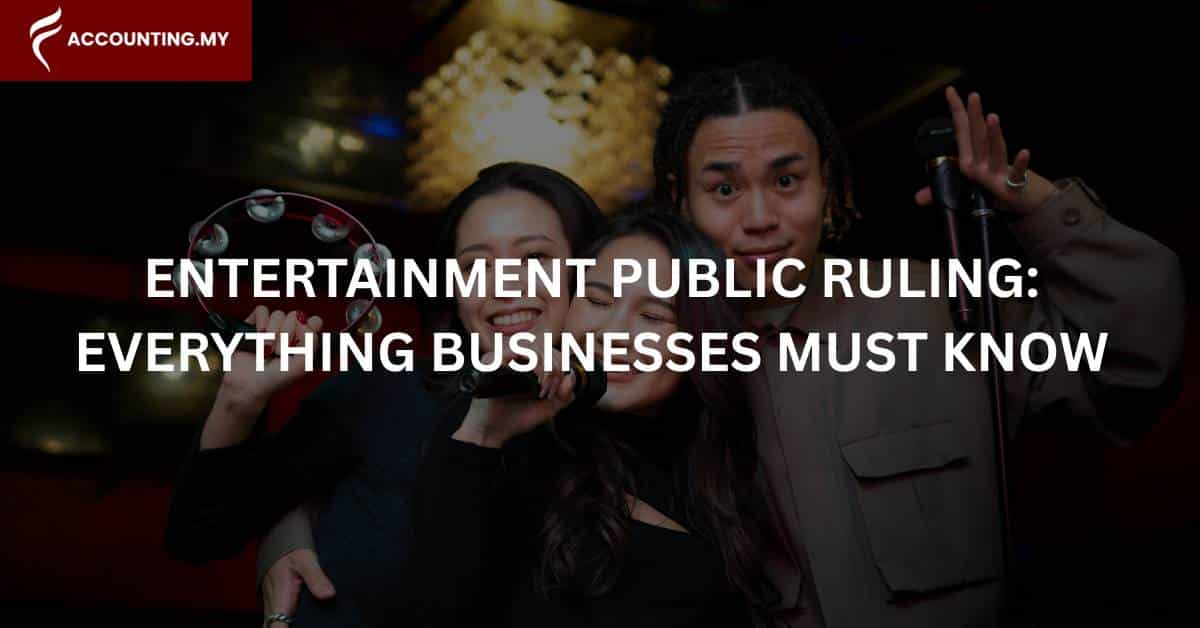
In Malaysia, entertainment is part of doing business. Client lunches, festive banquets, annual dinners, and team retreats are common. However, when these expenses are claimed incorrectly, they are among the first items disallowed during an audit.
With e-Invoicing now mandatory for businesses above the exemption threshold (phased by turnover), the margin for error is smaller. Hence today, the top accounting firm in Malaysia will explain how entertainment expenses are treated under Malaysian tax rules.
What Counts as an Entertainment Expense Under Malaysian Tax Law?
Entertainment expenses refer to any cost incurred to provide food, drinks, recreation, or hospitality to others.
This includes:
- Meals at restaurants or hotels
- Banquets and annual dinners
- Tickets to events or shows
- Gifts, hampers, or flowers
- Refreshments provided during meetings
The test applied by LHDN is not what the expense is called, but why it was incurred and who benefited.
For Malaysian tax purposes, “entertainment” is defined in section 18 of the Income Tax Act 1967 as including the provision of food, drink, recreation or hospitality of any kind, and related accommodation or travel, provided in promoting or in connection with a business.
How Does LHDN Decide Between 100 % and 50 % Deductibility?
The deciding factor is who receives the entertainment, not how much is spent.
Under the Income Tax Act 1967 and LHDN ruling, entertainment expenses are classified based on the recipient and the purpose of the expense, not the event label or invoice description.
LHDN groups entertainment into three categories:
Staff-Related Entertainment
Entertainment provided exclusively to employees or directors as part of staff welfare or internal activities.
These expenses are generally 100% tax deductible, provided no clients, suppliers, or personal guests are involved and the cost is reasonable for the business.
If employee entertainment is incidental to entertaining clients/suppliers, the restriction can still apply, so mixed attendance needs clear separation.
Business Associate Entertainment
Entertainment provided to clients, customers, suppliers, agents, or other third parties in the course of business.
These expenses are typically limited to a 50% tax deduction, even when the entertainment is directly linked to business discussions or revenue generation.
Personal or Excessive Entertainment
Entertainment that benefits family members, friends, or private interests, or that is considered unreasonable in scale relative to the business.
These expenses are not tax deductible, regardless of documentation or invoicing.
Important: Each category is treated differently for tax purposes because LHDN applies a purpose and beneficiary test, focusing on who ultimately benefited from the entertainment and if it was incurred wholly and exclusively in the production of gross income.
In general, entertainment is restricted to 50% deduction, unless it falls under specific categories that qualify for 100% deduction (commonly staff-related entertainment and certain promotional cases).
When Are Entertainment Expenses 100% Tax Deductible?
Expenses are fully deductible when they are for staff welfare or public promotion, with no personal or client element.
Common 100% Deductible Scenarios
- Annual dinners for employees only
- Team building or staff retreats
- Internal training sessions with meals
- Office refreshments provided on company premises
- Promotional items with permanent company branding
- Free product samples given to the public
Example: Company Team Building Retreat
A company organises a two-day team building retreat at Pulau Redang.
Attendees include employees and directors only.
The programme includes workshops, structured activities, meals, and accommodation.
Tax treatment: 100% tax deductible.
Why it works
This qualifies as staff welfare and human resource development. There are no business associates or personal guests involved.
Audit-proofing tips
- Keep an attendance list
- Retain the programme agenda
- Ensure invoices clearly describe training or team activities
When Are Entertainment Expenses Only 50% Deductible?
Entertainment involving business associates is generally limited to a 50 percent deduction.
Business associates include:
- Clients and customers
- Prospective clients
- Suppliers and vendors
- Agents, consultants, or contractors
Common 50% Deductible Scenarios
- Client lunches or dinners
- Festive hampers without permanent branding
- Flowers sent to clients for openings or events
- Entertainment tickets given to clients
- Meals attended by directors and clients
Example: Client Lunch With Directors
A director takes a client to a restaurant to discuss a contract renewal.
Tax treatment: 50% tax deductible.
Why: The presence of a business associate places the expense under partial deductibility, even if the discussion is purely business-related.
What Happens When Staff and Clients Attend the Same Event?
Once business associates are present, the event is treated as client entertainment unless costs are clearly separated.
Example: Project Completion Banquet
A company hosts a banquet to celebrate a completed project.
Attendees include employees, directors, and clients.
A single invoice is issued for the entire event.
Tax treatment: 50% tax deductible.
Why: Without a clear cost split, LHDN treats the entire event as business associate entertainment.
High-risk mistake: Attempting to split the deduction internally without invoice or per-head allocation evidence often results in disallowance during audits, so be wary of this.
Are Annual Dinners Always Fully Deductible?
Many companies in Malaysia organise annual dinners as a way to recognise staff contributions and strengthen internal morale. From a tax perspective, these events can be fully deductible, but only when they meet strict attendance and purpose conditions.
Example: Company Annual Dinner
A company holds its annual dinner at a hotel ballroom in KL.
Attendance is limited to employees and directors only.
The event includes stage performances, lucky draw prizes, and a buffet dinner.
Tax treatment: 100 % tax deductible.
This is treated as staff welfare expenditure, which LHDN generally allows in full when the event is clearly internal and not linked to client entertainment or promotion.
Where Claims Commonly Fail
Problems arise when the event is no longer purely staff-focused. If the company:
- Invites clients, suppliers, or business partners
- Uses the dinner to announce collaborations or commercial milestones
- Allows spouses or personal guests to attend
LHDN may reclassify the entire event as business associate entertainment, limiting the deduction to 50%, even if most attendees are employees.
“In audits, LHDN looks at who attended and why the event was held, not how it is described on the invoice.” – Kevin, senior accountant from Accounting.my
Keeping a clear attendance list and ensuring the dinner remains strictly internal is key to preserving full deductibility.
How Does e-Invoicing Affect Entertainment Claims in 2026?
Once your e-Invoicing implementation date kicks in, classification alone is no longer enough. Entertainment expenses must also survive e-Invoice validation.
Under MyInvois validation and linked records, it becomes easier for IRBM (HASiL) to compare supplier-issued e-Invoices with buyer records and supporting documentation during reviews.
What Has Changed
Entertainment claims are now assessed on two levels:
- Is it 100%, 50%, or non-deductible?
- Can it be supported by a validated, traceable e-Invoice record?
Fail either test, and the claim is at higher risk of disallowance.
e-Invoicing Implications for Entertainment Expenses
High-value or recurring expenses face stricter scrutiny
Entertainment costs that are large in amount or repeated monthly without validated e-Invoices are more likely to be questioned, even if they are otherwise deductible.
From 1 January 2026, certain transactions cannot be included in a consolidated e-Invoice and must be issued individually (commonly including single high-value transactions above RM10,000 and other categories listed in the Specific Guideline). This commonly affects hotel venues, corporate banquets, and bulk hamper orders issued under one bill.
This commonly affects:
- Hotel ballrooms for annual dinners
- Corporate banquets
- Bulk festive hampers
- Event packages issued under one invoice
Missing buyer details at the point of payment makes later correction difficult.
Patterned spending just below thresholds is detectable
Repeated entertainment expenses clustered just under RM10,000 are easily flagged under e-Invoicing analytics, especially if they occur monthly or near year-end.
Consolidated e-Invoices shift work to month-end
Smaller entertainment spends may still be consolidated, but reconciliation now needs to happen monthly.
Year-end receipt submission without matching monthly records is no longer reliable.
Correction windows are tight
Once an e-Invoice is validated, most errors must be dealt with within the 72-hour cancellation or rejection window.
After that, you normally correct mistakes (for example, wrong buyer name, wrong amount, or incorrect splitting) by issuing a credit note, debit note, or refund-note e-Invoice rather than cancelling the original.
Self-billed e-Invoices apply in cross-border cases
Where entertainment-related costs are paid to foreign suppliers who cannot issue Malaysian e-Invoices, the Malaysian buyer is generally required under LHDN’s e-Invoice Specific Guideline to issue a self-billed e-Invoice by the stipulated deadline so that the expense is deductible.
What This Means for Entertainment Claims
- Missing e-Invoices do not automatically disallow a claim
- But the risk of challenge increases sharply, especially for material amounts
- LHDN now looks for consistency across invoices, payments, and accounting records
Entertainment expenses that were once “acceptable but messy” are now easier to question.
Best Practice for Businesses: Staff should request e-Invoices at the point of payment, especially for:
- Client meals
- Hotels and venues
- Banquets and events
- Any bill that could exceed RM10,000
For smaller spends, finance teams should implement a monthly cut-off and reconciliation process, instead of relying on year-end receipt collection.
Summary Table: Common Entertainment Scenarios
Expense Type | Recipient | Deduction | Practical Note |
Annual dinner | Employees only | 100% | Keep staff attendance records |
Team building retreat | Employees only | 100% | Programme agenda is critical |
Client lunch | Client and director | 50% | Business purpose should be recorded |
Festive hamper | Client | 50% | Branded promotional items may qualify for full deduction in some cases; keep evidence of the promotional purpose and branding. |
Coffee meeting outside office | Client | 50% | Location matters |
Overtime meals | Employees | 100% | Treated as staff welfare |
What Expenses Are Completely Non-Deductible?
Some expenses fail regardless of documentation.
These include:
- Personal meals charged to the company
- Club memberships and entrance fees
- Entertainment for family or friends
- Lavish expenses disproportionate to business size
- Investor or shareholder entertainment
Even with e-Invoices, these claims are commonly disallowed.
How Do You Audit-Proof Entertainment Expenses?
LHDN focuses on patterns, not isolated receipts.
- Maintain a guest log with names and business purpose
- Separate accounting codes for 100% and 50% entertainment
- Keep supporting records (validated e-Invoices, receipts, attendance/guest logs, and business purpose notes) for at least 7 years.
- Ensure spending levels are reasonable for revenue size
- Match e-Invoices with bank payment records
Reasonableness is subjective, but repeated high monthly claims draw attention from the taxman quickly.
Simple Entertainment Decision Guide For Malaysia
Use this quick flow to decide if an entertainment expense is 100%, 50%, or non-deductible:
1. Is it related to your business?
- If no → Non-deductible (Example: purely personal dinners, family outings)
- If yes → Go to Step 2
2. Who is the entertainment for?
- Employees / directors only → Go to Step 3
- Clients, customers, suppliers, agents or other business partners → Go to Step 4
- Family members, friends, investors or shareholders → Usually non-deductible
3. Employees / directors only (internal events)
- Staff welfare, annual dinner, team building, overtime meals, internal training with meals → Generally 100% deductible
- Mixed with personal guests or family → May be partly or fully non-deductible on the personal portion
4. Business associates (clients, suppliers)
- Normal meals, festive hampers, flowers, event tickets, meetings over coffee
→ Generally 50% deductible - Promotional items or gifts with your permanent logo, or free product samples to the public → Usually 100% deductible under promotional exceptions
- Lavish or excessive compared to your business size → Risk of partial or full disallowance
5. Mixed events (staff + clients)
- If staff and clients attend the same event and the cost is not clearly split on the invoice (per head or per table): → LHDN often treats the whole amount as 50% deductible.
- If the invoice clearly separates staff and client costs (for example, separate bills or per-head allocation): → Staff portion may be 100%, client portion 50%.
PR 4/2015 includes an example where supplier dinner with employees present is still treated as supplier entertainment (50%).
6. Documentation and e-Invoicing check
Do you have:
- A valid e-Invoice or invoice?
- An attendance list or guest log (for events)?
- A clear business purpose noted (especially for client meals)?
If yes → Deduction is more defensible.
If no → Higher risk of disallowance, even if the expense is theoretically deductible.
Shortcut:
- Staff-only, welfare-type → Usually 100%
- Client/supplier entertainment → Usually 50%
- Personal, family, investor or excessive → Often non-deductible
Entertainment Expenses in Malaysia: What Businesses Should Do
Entertainment remains a legitimate business expense in Malaysia, but in 2026 the margin for error is much smaller. The rules are stricter, audits are faster, and weak documentation is easier for LHDN to flag under e-Invoicing.
Businesses that clearly distinguish 100% versus 50% deductibility, apply the rules consistently, and align their claims with validated e-Invoice records reduce unnecessary tax exposure, penalties, and audit friction.
At Accounting.my, our accounting services help businesses handle corporate tax compliance end to end. This includes:
- Reviewing entertainment expenses before submission
- Classifying claims correctly under LHDN rules
- Ensuring e-Invoicing records support deductions
- Reducing disallowances during audits
If you want clarity on whether your entertainment claims are defensible in 2026, our team can help you get it right before LHDN comes knocking.
Source:
- Income Tax Act 1967 (Act 53), Malaysia – including sections 18, 33(1), 39(1)(l), 82 and 82A
- Inland Revenue Board of Malaysia (LHDN) – Public Ruling No. 4/2015: Entertainment Expenses (summarised by professional firms)
- Baker Tilly Malaysia – Business & Tax Information (notes on 50% entertainment restriction and fully-allowed categories)
- YYC Advisors – “Entertainment Expenses: Have Fun Without Worries! It’s Tax Deductible!”
- L&Co Chartered Accountants – “Tax Treatment of Entertainment Expenses”
- IRBM e-Invoice Guideline and Specific Guideline (MyInvois) – Malaysian e-Invoicing model, self-billed e-Invoices, validation rules
- MyInvois (LHDN) SDK – e-Invoicing API documentation (72-hour cancellation/rejection window)
- LHDN / Malaysian tax advisory articles on record-keeping – 7-year document retention requirement linked to sections 82 and 82A
Frequently Asked Questions About Related Party Transactions
Under Section 221 of the Companies Act 2016, a director who fails to disclose their interest in a contract commits an offense. Upon conviction, they could face up to five years in prison, a fine of up to RM3 million, or both.
In Malaysia, this includes a director's spouse, child, parent, and any company where the director or their family holds at least 20% of the voting shares.
Once any percentage ratio of an RPT hits 5% or more, Bursa’s Listing Requirements require the company to appoint an independent adviser, issue a circular and obtain specific shareholder approval at a general meeting.
The Audit Committee must review all RPTs to ensure they are in the best interest of the company, fair, reasonable, and on normal commercial terms.
Generally, Section 224 of the Companies Act 2016 prohibits companies from making loans to directors or providing security for their loans, with very limited exceptions for housing schemes or expenses incurred for company duties.
A substantial shareholder is someone who holds at least 5% (or 10% in some specific contexts) of the total number of voting shares in the company. Their transactions with the company are treated with the same level of scrutiny as those of directors.